

Welcome From the Program Chairs
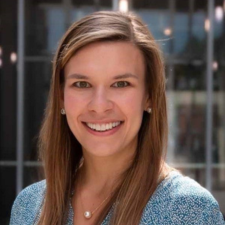

As your 2025 ABCT Program Chairs, we joyfully welcome you to ABCT’s 59th Annual Convention in New Orleans, LA. New Orleans is a vibrant city known for its unique blend of cultures, its lively atmosphere, and distinct architecture with influences from French, Spanish, and African traditions. The city is famous for its music scene (and especially its jazz), its Mardi Gras celebrations, and its Cajun and Creole cuisine. We hope that between conference programming you take some time to explore the city and appreciate its history and culture.
Our 2025 Convention is organized around the theme of Bridging the Divide: Promoting Rigorous Science and Inclusive Affirming Therapies. At a time of cultural divisiveness, both within the United States and globally, this year’s conference centers on pillars of unity and inclusivity. We hope that this 2025 Convention serves as a reminder of our field’s dedication to advancing rigorous science, science which seeks to develop evidence-based psychotherapy that can be widely applied across cultures, genders, and ages to promote mental well-being for any patient entering the consulting room. The convention’s research and clinical presentations focus on cutting-edge analytical methods, novel interventions, and implementation of cognitive and behavioral therapy in real-world, scalable settings. As conference chairs, we made it a priority to accept presentations grounded in rigorous scientific methods that were aligned with the conference theme.
In addition to submissions from our members, we selected the following invited addresses, which will occur in a new plenary session format each morning of the convention. We are grateful to welcome six amazing speakers across three morning sessions:
Friday, November 21, 2025, 8:30–9:45 AM
- Debra Kaysen, Ph.D., Stanford University — “Bridging Cultures: Collaborative Approaches to Culturally Adapting Evidence-Based Psychotherapies for Diverse Populations”
- Douglas Mennin, Ph.D., Columbia University — “Intervening on the Emotional Moment for Those in Distress”
Saturday, November 22, 2025, 8:30–9:45 AM
- Mark Hatzenbuehler, Ph.D., Harvard University — “A Multidisciplinary Approach to the Study of Social Policies and Mental Health Disparities among Sexual and Gender Minorities: Insights from Stigma Research”
- Diane Chen, Ph.D., Lurie’s Children Hospital at Northwestern Feinberg University — “State of the Science and Emerging Research on Gender Affirmative Medical Care for Transgender Youth”
Sunday, November 23, 2025, 8:30–9:45 AM
-
Jonathan Huppert, Ph.D., The Hebrew University of Jerusalem – “Responding to Mass Trauma: Adapting Evidence-Based Treatments to Scale in Israel after October 7th”
- Laura Miller-Graff, Ph.D., University of Notre Dame — “Evaluating a Family-Focused Intervention to Support Palestinian Parents and Adolescents”
We are also pleased to once again offer Advanced Clinician Seminars, a novel format piloted by last year’s program chairs with much success. These Advanced Clinician Seminars are designed for highly skilled practitioners looking to take their abilities to the next level with experts who will engage in instruction, role-play, and case consultation. We are proud to announce that this year’s Advanced Clinician Seminars are:
- Michael Otto, Ph.D., Boston University — “Creating Clinical Experiences that Count: Enhancing Adaptive Learning from Experiential Interventions (Exposure Therapy and Activity Assignments)”
-
Anne Marie Albano, Ph.D., Columbia University — “Stepping in and Stepping Up: Strategies for Fostering Parent and Teen/Young Adult Collaboration in Managing Anxiety and Meeting the Tasks of Adulting”
-
Shireen Rizvi, Ph.D., Montefiore Medical Center/Albert Einstein College of Medicine — “DBT Skills for Transdiagnostic Disorders”
This year we also continued to uphold a rigorous, data-driven, peer review process that first and foremost considered submission scores from volunteer peer reviewers. Posters were assigned two peer reviewers and abstracts for oral presentations, symposia, clinical round tables, panels, spotlight research, and clinical grand rounds were assigned three peer reviewers. Each peer reviewer provided independent scores on a variety of metrics (e.g., significance, approach, alignment with conference theme) which were tallied together to create an overall score. Overall scores from the reviewers were averaged to create a final average score for each submission. Abstracts were then organized by final average scores, and the top scores were accepted based on space constraints per each session type (e.g., panels, oral abstracts, etc.). For scores in the mid-range, consideration was given to balance out programming and, in the case of a tie, Special Interest Group (SIG) sponsored abstracts were offered acceptance.
This was also the first year for which we reduced the number of symposia, and instead encouraged members to submit their highest quality individual oral abstracts. We were pleasantly overwhelmed with both the quantity and quality of submissions for the new oral abstract session type! We had over 384 oral abstracts submitted and were able to accept 287. 62 of the submitted abstracts just missed acceptance as oral presentations, and were instead offered to present as posters—with 51 presenters electing to do so.
This process resulted in a final program consisting of:
80 symposia
37 panels
23 clinical round tables
4 clinical grand rounds
5 spotlight research sessions
1,001 posters
In addition to our inspiring lineup of content and presentations, we know that many (ourselves included) look forward to the ABCT Annual Convention as a reunion of like-minded colleagues. Please use the time between programming, meals, and evenings to catch up, talk shop, and inspire each other. One great opportunity to connect with new and old friends alike will be the inaugural Benefit Luncheon, which is scheduled from 12:00 p.m.–1:30 PM on Saturday, November 22. We encourage members to sign up for this special event and help support the future of cognitive and behavioral science for years to come. Please be on the lookout for additional information about this initiative in the following weeks.
Finally, as we look forward toward the convention, we invite you all to think about how your own science and practice can align with this year’s theme, by promoting rigorous methodologies and inclusive, affirming practices so that cognitive behavioral therapy can be as widely applicable as possible in a constantly changing landscape of society and mental health.
It has been an honor to serve as your program chairs for the 2025 ABCT Annual Convention; we are thankful for the opportunity granted to us by President Steven Safren, Ph.D., ABPP, and the ABCT Board. We are indebted to the 2025 Convention Committee for their steadfast dedication and commitment to planning such a wonderful convention as well as to the ABCT Central Office staff, especially Courtney White and Stephen Crane, who have been excellent leaders, detail-oriented, and thoughtful in their preparation for this year’s convention. Finally, a huge cheer to everyone who generously offered their time on the Program Committee as a scientific reviewer, and to Dr. Tina Boisseau for leading the charge as Coordinator of Convention and Continuing Education. The reviews were thoughtful and thorough, and we could not do this without your help.
For those of you who would like an opportunity to be involved in ABCT convention planning in the future, please visit the “Volunteer Me” portal on the website to look for opportunities to do so. Wishing everyone a meaningful conference full of excellent programming, connection with colleagues, and tasty beignets!
We are looking forward to seeing you there.
Best,
Brooke and Elliott