



ABCT History Timeline
ORIGIN
1950s
BEGINNINGS
1960s
1966
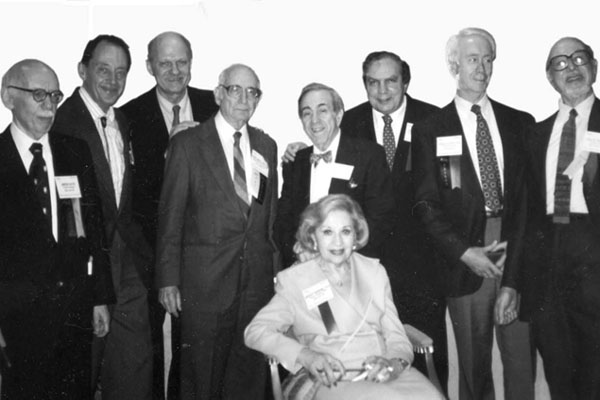
The first wave of behavior therapy is formalized, with the founding of the Association for Advancement of Behavioral Therapies in New York City by 10 behaviorists who were dissatisfied with the prevailing Freudian/psychoanalytic model. Founding members include John Paul Brady, Joseph Cautela, Edward Dengrove, Martin Gittelman, Cyril Franks, Leonard Krasner, Arnold Lazarus, Andrew Salter, Dorothy Susskind, Joseph Wolpe.
1967
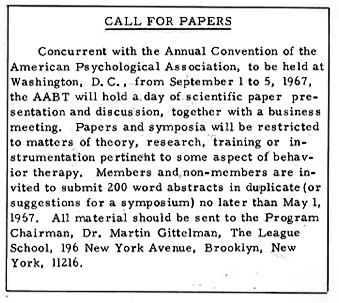
The first annual meeting of AABT is held in Washington, DC, bringing together clinicians, researchers, and educators committed to advancing behavioral science and practice. The meeting established a tradition of scientific exchange that continues today through ABCT’s annual convention.
1967
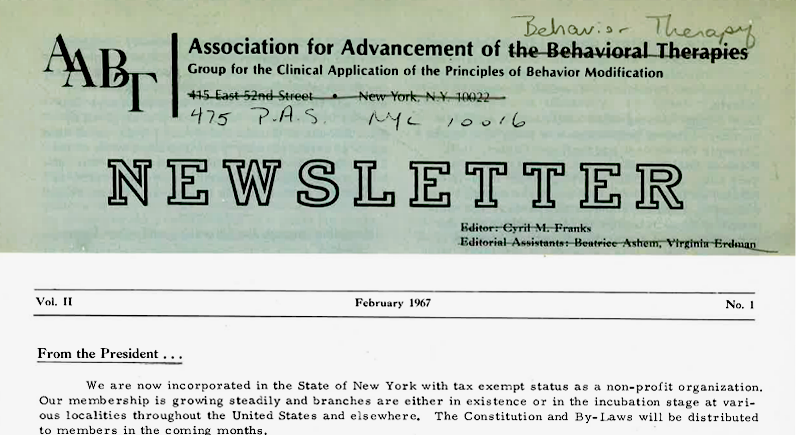
To better reflect its growing identity and mission, the organization changes its name from the Association for Advancement of Behavioral Therapies to the Association for Advancement of Behavior Therapy. The change emphasized the unifying scientific principles underlying behavioral approaches while maintaining a commitment to research-based clinical practice.
1967
The second wave of empirically-tested treatments gains momentum, with the first comprehensive cognitive model of depression and a treatment focused on changing maladaptive thinking.
GROWTH/EXPANSION
1970s
1970
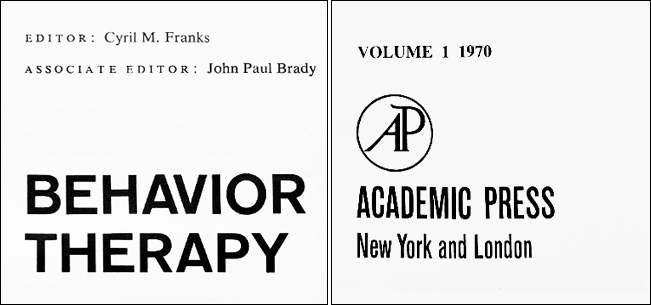
AABT launches Behavior Therapy, which quickly becomes the association’s flagship scientific journal, with Cyril Franks serving as its founding editor. The journal provided a dedicated outlet for rigorous research on behavioral assessment and treatment, helping establish behavior therapy as a scientifically grounded discipline.

1974
Gerald Davison’s presidential address at AABT, “Homosexuality: The Ethical Challenge,” presents one of the first challenges to the ethics of sexual conversion therapies and contributes to subsequent decisions on the part of the American Psychological Association to cease to endorse or promote these types of therapies.
1974
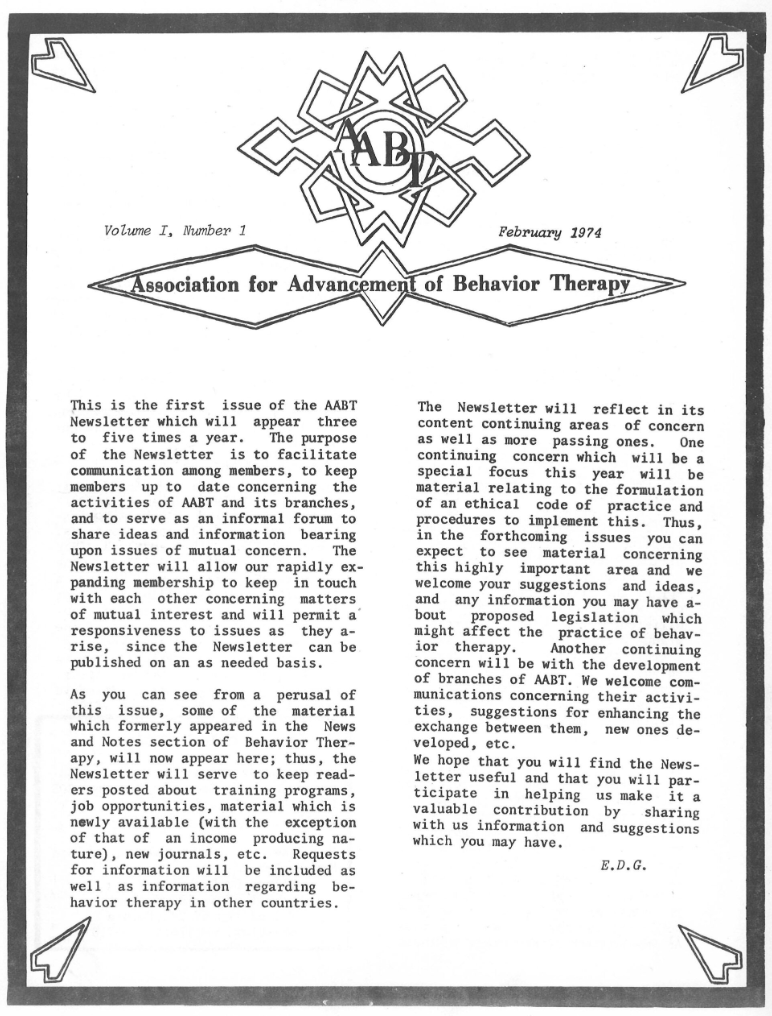
The first issue of the “AABT Newsletter,” a precursor to the Behavior Therapist, is published.
1976
AABT creates the Directory of Training Programs to provide students and early-career professionals with a centralized resource for identifying graduate, internship, and postdoctoral training opportunities in behavior therapy. The directory helped standardize professional training, strengthened the pipeline of future clinicians and researchers, and promoted the dissemination of evidence-based behavioral approaches across academic and clinical settings.
1977
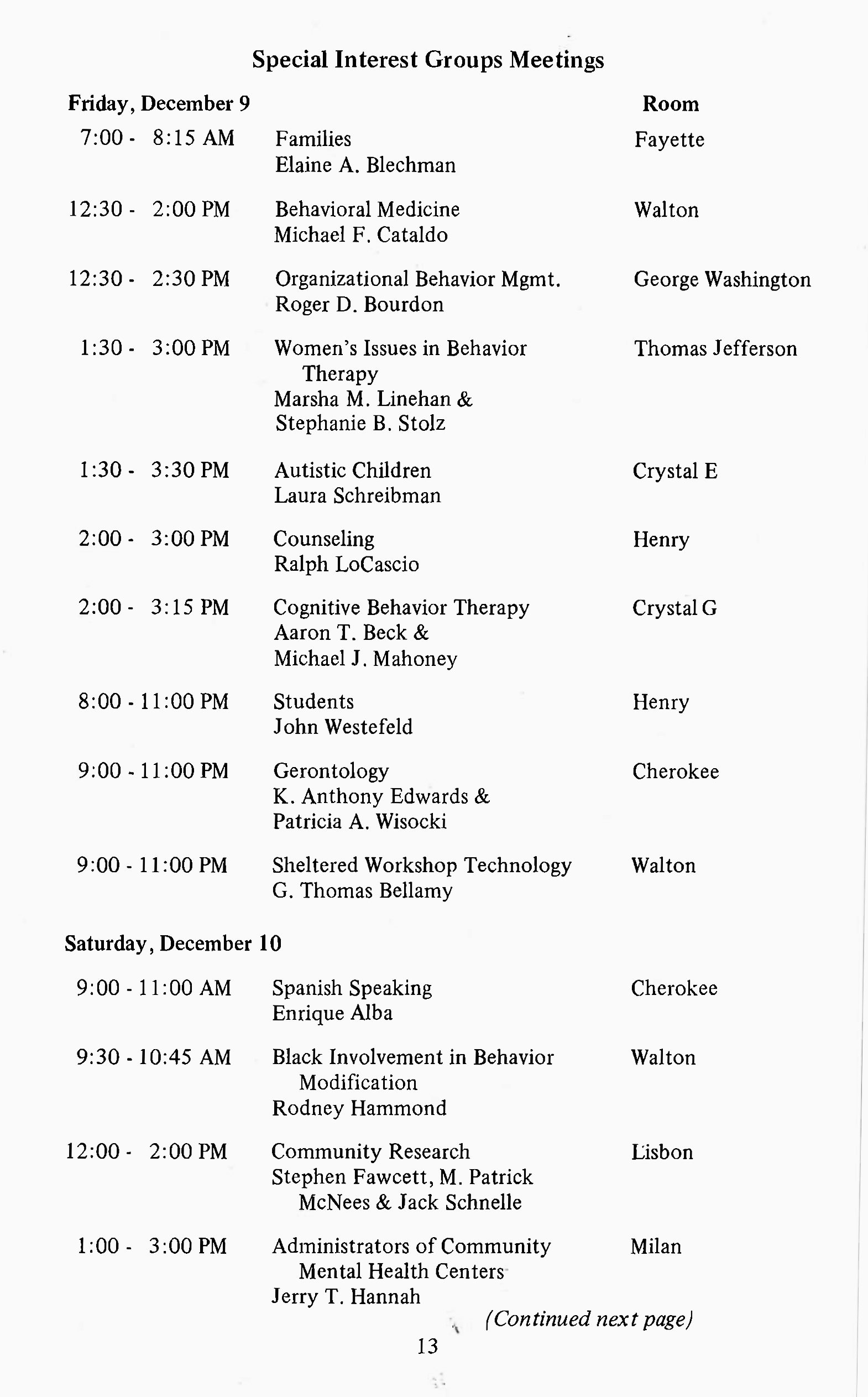
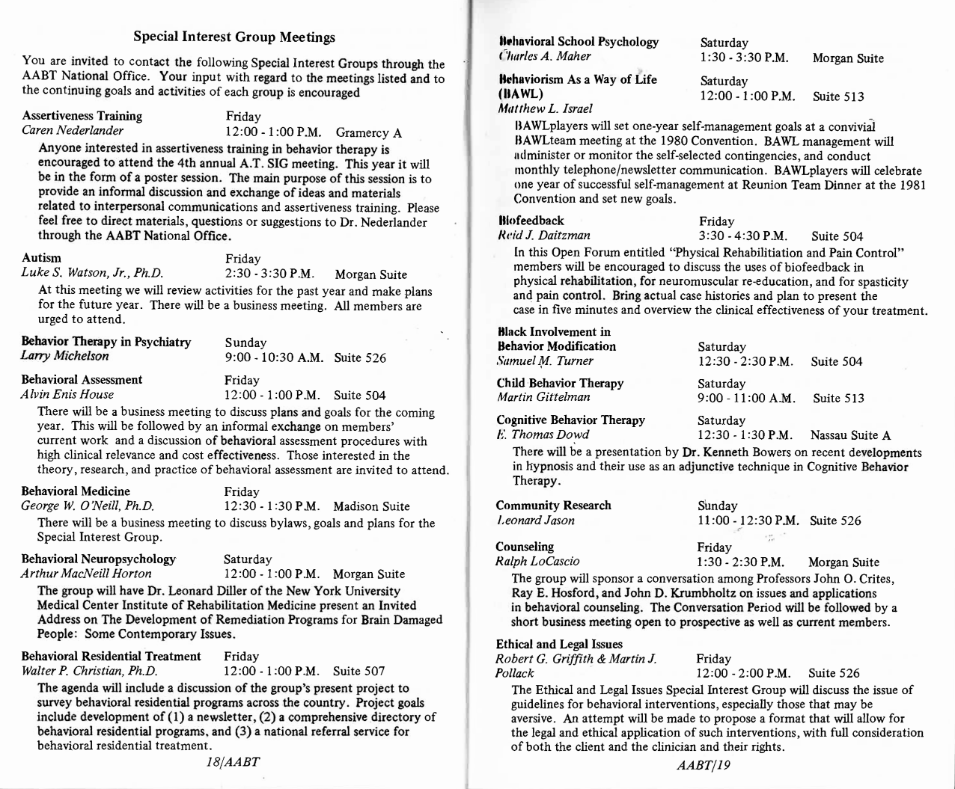
AABT establishes its first Special Interest Groups (SIGs) to bring together members with shared clinical, research, and professional interests. The SIG structure fostered collaboration, mentorship, and innovation within emerging specialty areas and would eventually become one of the association’s most important mechanisms for member engagement and scientific exchange.
1978
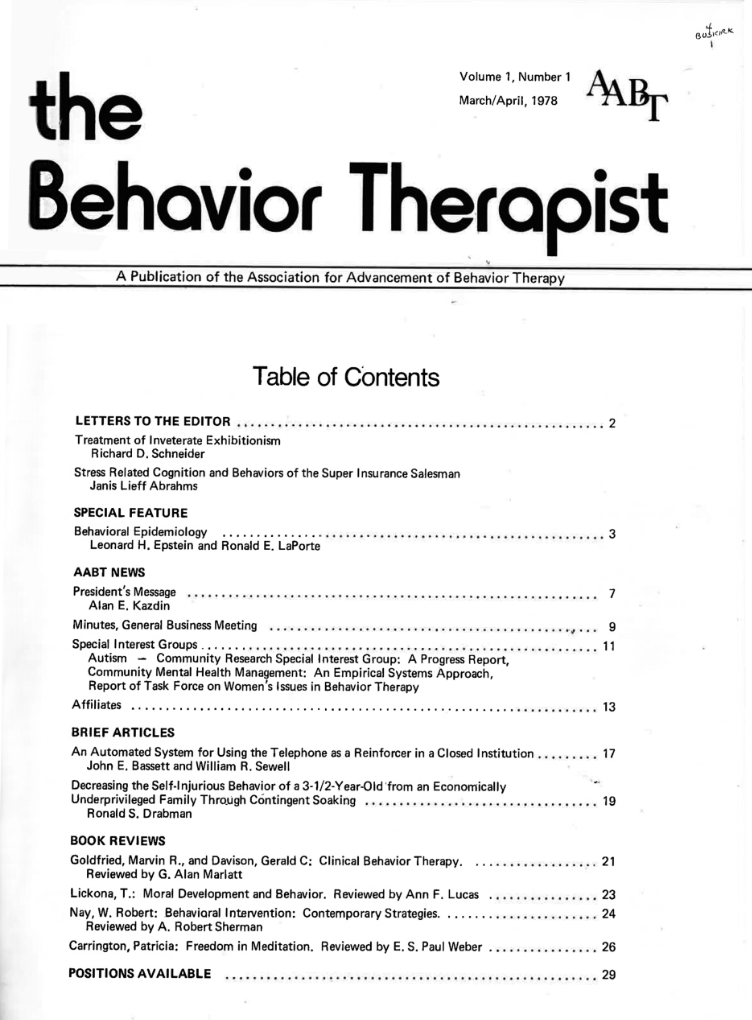
AABT launches the Behavior Therapist as a professional publication for members, with Michael F. Cataldo serving as founding editor. In contrast to the research focus of Behavior Therapy, the new publication emphasized clinical practice, professional issues, training, and communication within the growing behavior therapy community.
1978
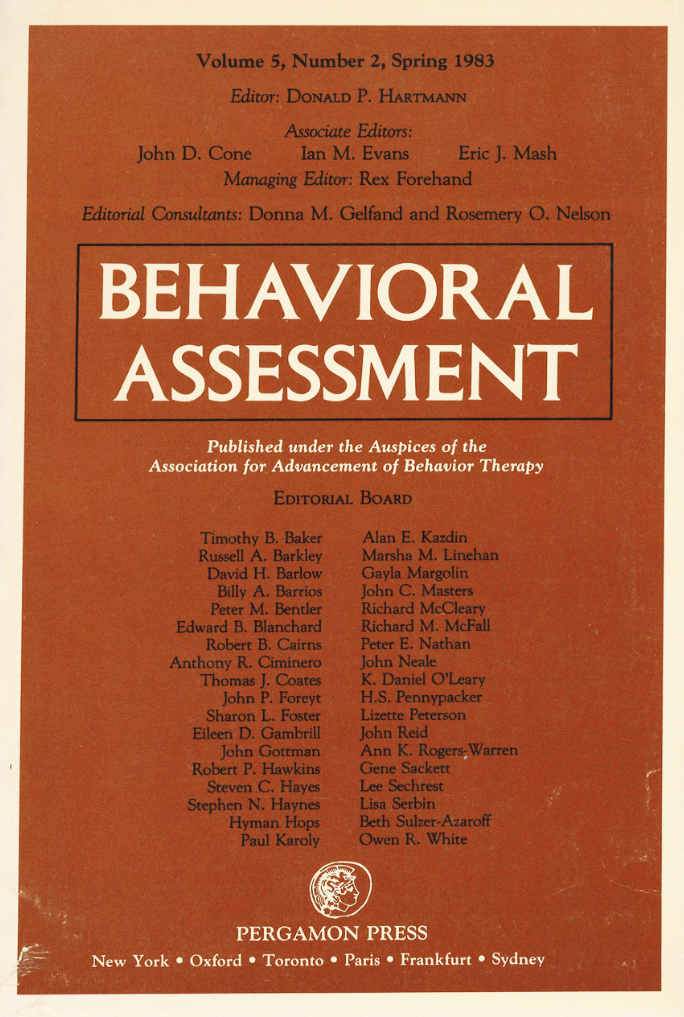
First issue of the journal Behavioral Assessment launched by AABT (Editor: Rosemery Nelson-Gray) and published by Pergamon Press. In 1992, the journal was absorbed into Behavior Research & Therapy as a special “assessment” section.
COMMUNITY
1980s
1980

1981
Rosemery O. Nelson becomes the first woman to serve as president of AABT, marking an important milestone in the association’s history and in the advancement of women within psychology. Her presidency reflected the growing influence of women in behavioral science and helped pave the way for future generations of female leaders within AABT/ABCT and the broader field of clinical psychology.

1983
CONSOLIDATION & DEVELOPMENT
1990s

1993
AABT purchases its current headquarters in New York City at 305 Seventh Avenue, providing the organization with a permanent home and a stable base for its expanding operations. The acquisition reflected the association’s growth and maturation as a leading professional organization dedicated to evidence-based behavioral and cognitive therapies.
1993

1994
1997
1998
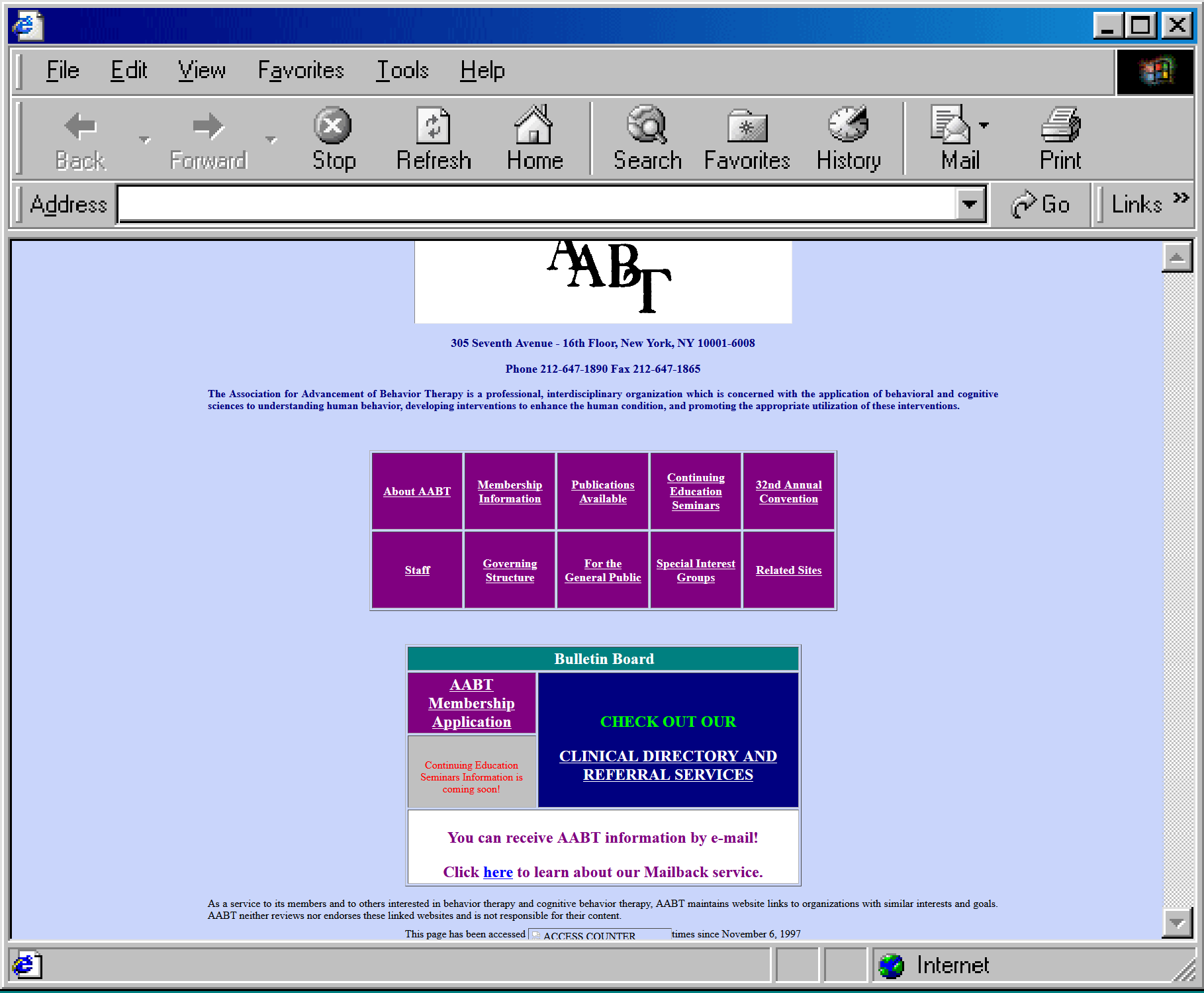
AABT creates its Online Clinical Directory, providing the public with a searchable resource for locating therapists trained in cognitive and behavioral approaches. The directory increased access to evidence-based care while helping connect consumers with qualified practitioners and enhancing the visibility of CBT services.
EXPANSION & CHANGE
2000s

2005
Recognizing the key role that cognitive science had come to play in research and clinical practice, the Association for Advancement of Behavior Therapy (AABT) changes its name to the Association for Behavioral and Cognitive Therapies (ABCT). The new name reflected the integration of behavioral and cognitive approaches that had become the dominant evidence-based paradigm in psychotherapy.
2008
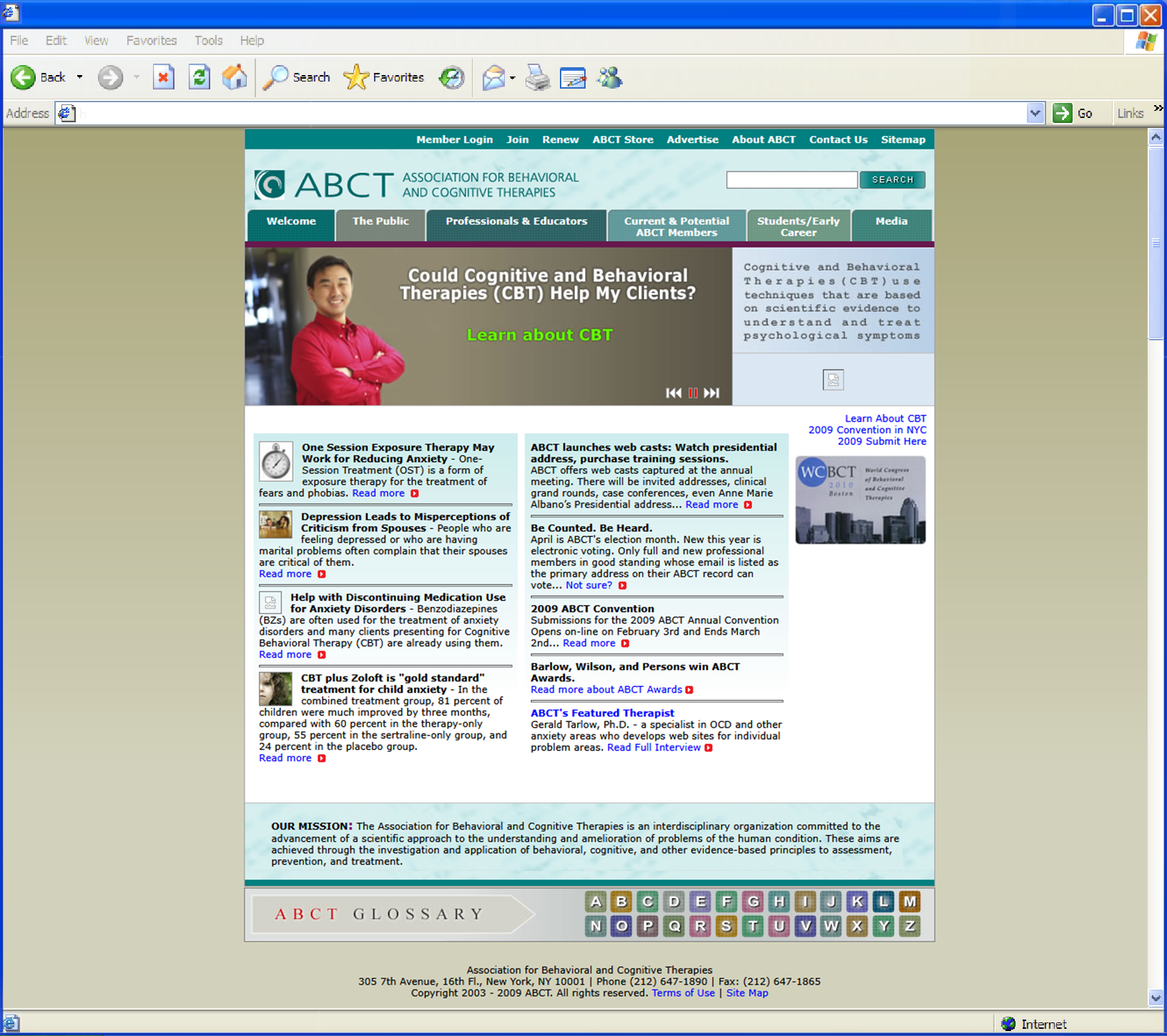
ABCT undertakes a major redesign of its website and expands access to digital resources, making publications, professional information, and member services more readily available online. This transformation modernized the association’s infrastructure and improved access to evidence-based resources for members, trainees, clinicians, and the public.
LOOKING FORWARD
2010s

2010
Dr. Debra Hope becomes the first ABCT president to openly identify as a member of the sexual and gender minority (SGM) community. This marked a milestone in the organization regarding diversity, inclusion, and the application of science to promote the well-being and rights of historically marginalized communities.
2015
ABCT establishes Fellow status to recognize members who have made distinguished, sustained, and outstanding contributions to behavioral and cognitive therapies. The designation created a formal mechanism for honoring excellence across research, clinical practice, education, dissemination, advocacy, and other areas of professional impact.
2018
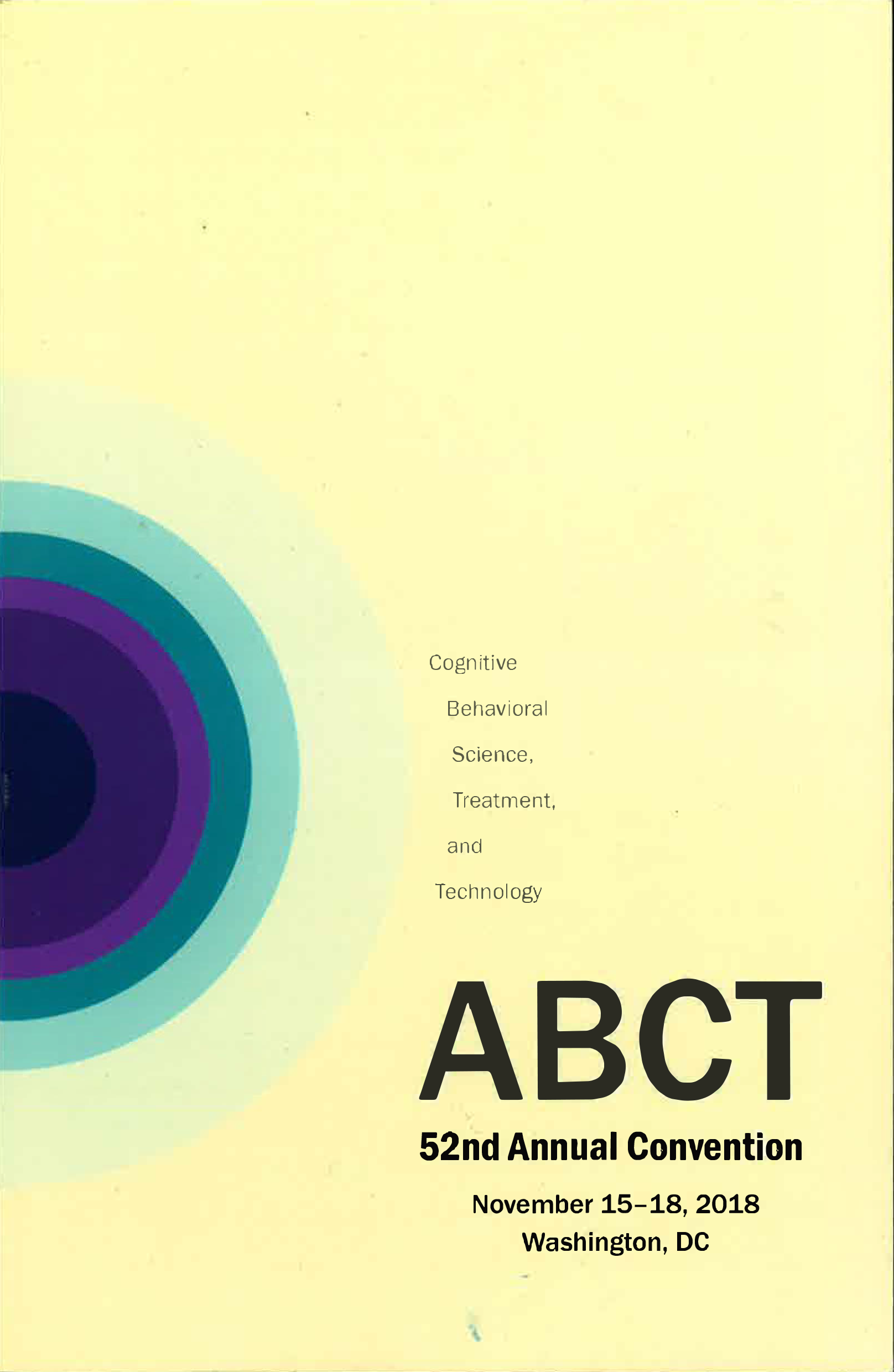
ABCT prints its final hard-copy conference book for the 52nd Annual Convention held that year in Washington, D.C.
2019
ABCT creates the Dissemination, Implementation, and Community Engagement Committee (DICEC) to promote the translation of scientific knowledge into real-world practice and public health impact. The committee reflected an increasing emphasis on ensuring that evidence-based interventions reach the diverse communities that can benefit from them, extending ABCT’s influence beyond academia and traditional clinical settings.
TRANSFORMATION
2020s
2020
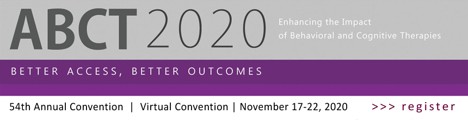
In response to the global COVID-19 pandemic, ABCT holds its first fully virtual annual convention. The format allowed the association to continue scientific exchange, professional networking, and clinical education while maintaining accessibility for members around the world during a period of widespread disruption. This period also signified a shift towards increased online learning and provision of clinical services via telehealth.
2023
ABCT launches the CHANGE Leaders Program to cultivate a more diverse and inclusive generation of leaders within the organization and the broader field of cognitive and behavioral therapies. The program provides mentorship, leadership development, and networking opportunities designed to support professionals from historically underrepresented backgrounds and perspectives.
2023
2024
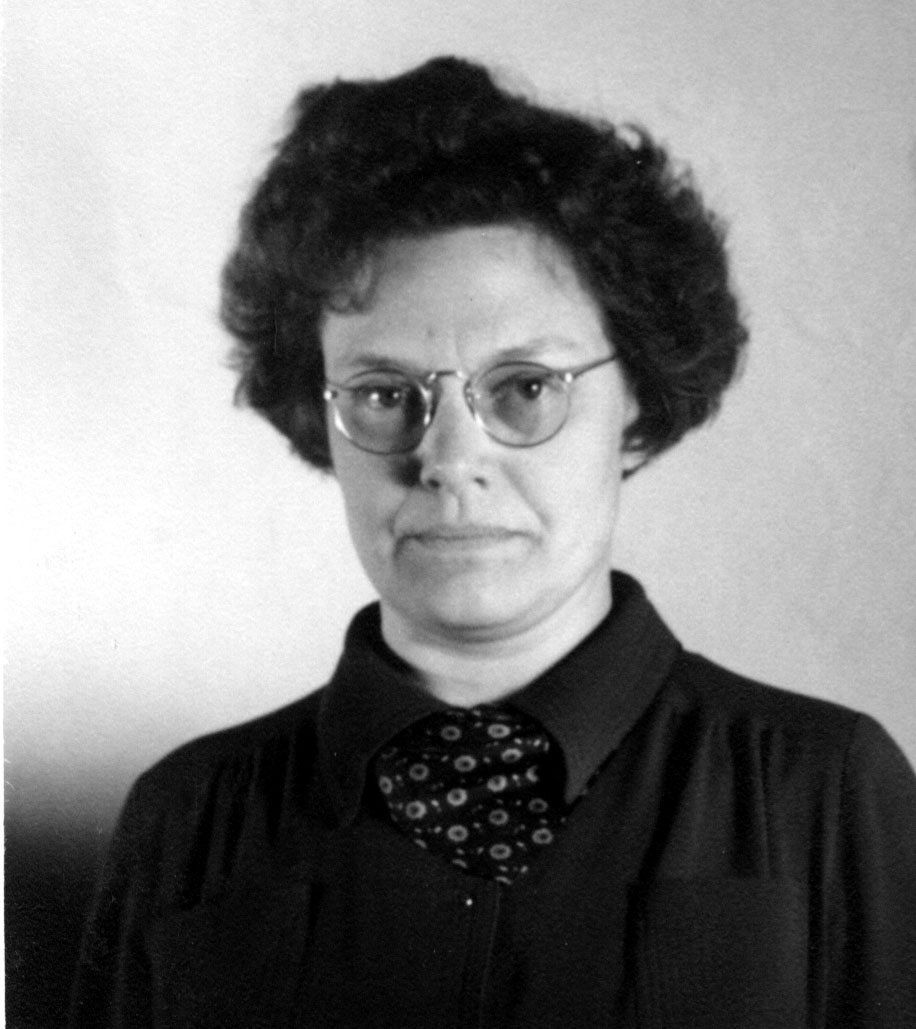
ABCT commemorates the centennial of Mary Cover Jones’ pioneering work, honoring her legacy as the “Mother of Behavior Therapy.” Her innovative demonstrations of counterconditioning and fear reduction in children laid the groundwork for many behavioral interventions that would later become central to evidence-based psychotherapy.
2026
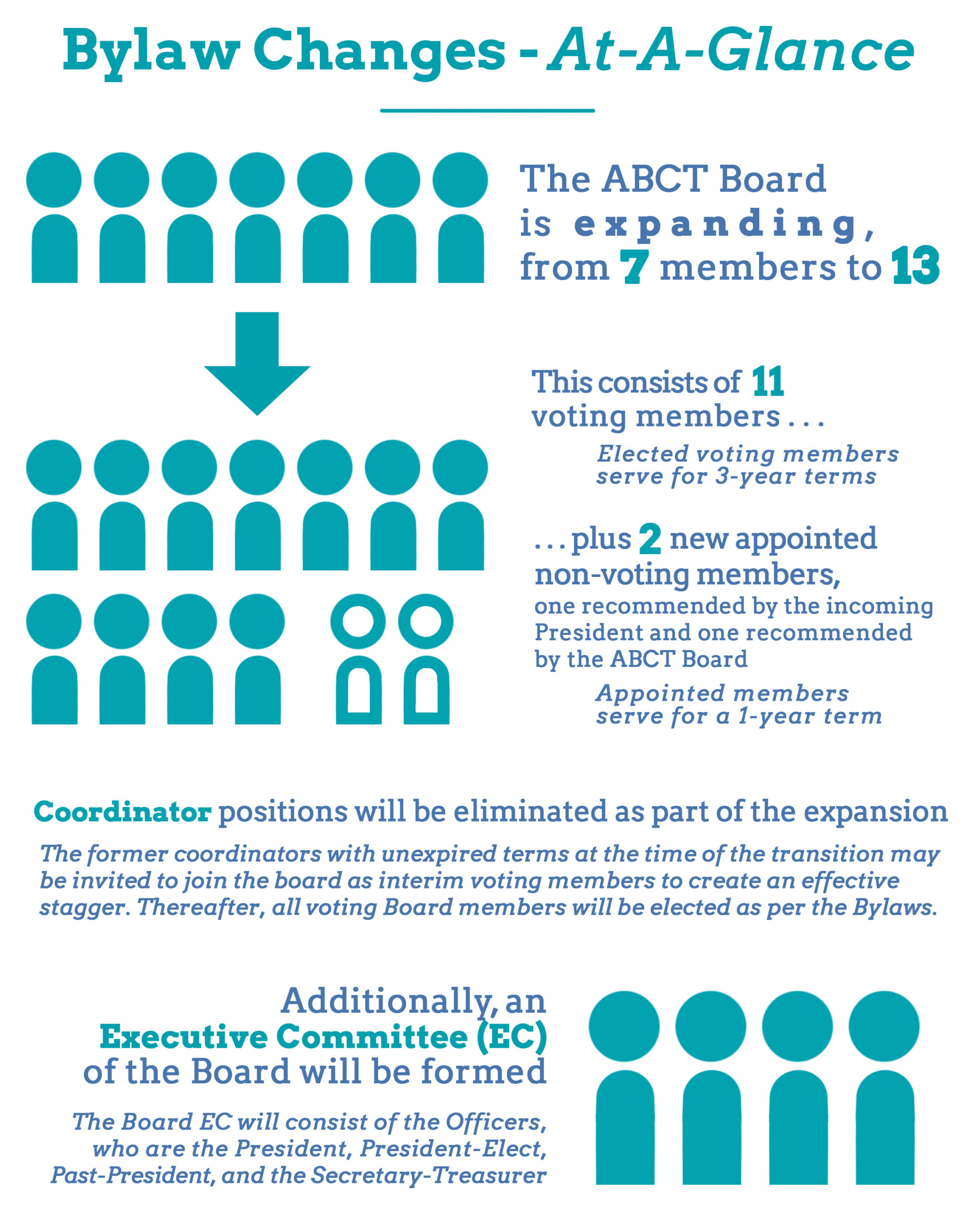
ABCT membership passes a referendum to expand the Board of Directors.