



Presidential Panel
Saturday, November 14 | 6:15 PM–7:45 PM
ABCT Presidential Panel: Transforming Eating Disorders Research and Practice by Dismantling the Eating Disorder Stereotype
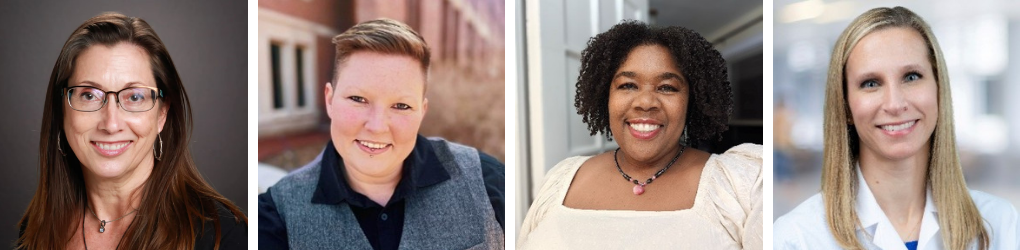
Panelists:
Carolyn B. Becker, Ph.D., Professor, Trinity University | Erin N. Harrop, Ph.D., LICSW, MSW, Assistant Professor, University of Denver | Natasha L. Burke, Ph.D., Associate Professor, Fordham University | Lisa Smith Kilpela, Ph.D., Assistant Professor, UT Health San Antonio
Participants earn 1.5 continuing education credits
Categories: Symptoms / Disorders – Eating Disorders
All levels of familiarity with the material.
In 2023, Past President Dr. Jill Ehrenreich-May introduced a new panel option for the time slot traditionally allocated to a Presidential Address. To reinforce the idea that future presidents have a choice in how they contribute to our convention, I have chosen to convene a panel of innovative scientist practitioners who are addressing a myth that plagues both research and clinical practice within the eating disorders field. Eating disorders have been long stereotyped as disorders that predominantly affect thin, white, affluent, young women and girls. Although recent research has repeatedly challenged the accuracy of this stereotype, it continues to be widely believed by healthcare providers, researchers, laypersons, grant reviewers, and funding agencies. Critically, research suggests that individuals who don’t fit the traditional eating disorder stereotype are less likely to self-identify as having an eating disorder, which can impact disclosure of eating disordered behaviors. They are also less likely to be correctly diagnosed by providers and/or to receive treatment. Further, because the stereotype has not only infected clinical practice but also the treatment literature, our existing evidence-based treatments were typically not designed to address the needs of those who do not conform to the stereotype. Researchers also face an uphill battle in convincing funders and reviewers that eating disorder research with novel populations is warranted. Critically, all of the above reduces the perception that eating disorders are a serious public health problem and worsens both the treatment gap and quality of care for eating disorders.
The aim of this panel is to showcase three next generation eating disorder researchers whose work is addressing limitations in research and practice created and reinforced by the eating disorder stereotype. Each presenter will have 12 minutes to discuss their work and vision, and then I will moderate a discussion focusing on future directions in addressing barriers to care for and research with underserved populations who are impacted by eating disorders. A key aim of this panel is for attendees to begin to recognize the ways in which eating disorders have likely flown under the radar in their own work.
Outline
- Dr. Becker will introduce the impact of the eating disorder stereotype and explain why this creates a substantial barrier to advancing research and practice. She will also introduce the three panelists.
- Each panelist will present a short talk on research that challenges the eating disorder stereotype.
- Dr. Erin Harrop will address eating disorders in the LGBTQIA+ community and in higher weight patients, who are often explicitly encouraged to continue eating disordered behaviors secondary to weight stigma.
- Dr. Natasha L. Burke will discuss intersectionality and eating disorder pathology in racially and ethnically minoritized communities.
- Dr. Lisa Kilpela will focus on eating disorders in older adult women.
- Both Drs. Kilpela and Burke will also address eating disorders and food insecurity.
- Dr. Becker will then moderate a discussion on future directions and ways we can all work to collectively improve care.
At the end of this session, the learner will be able to:
- Explain the negative impact of the eating disorder stereotype
- Describe evidence supporting the contention that eating disorders affect those who defy the eating disorders stereotype
- Identify ways that clinicians and researchers generally can contribute to meeting the needs of underserved individuals with eating disorders
Long-term goal:
To identify and begin to address gaps in clinical services and research that have been created by the eating disorder stereotype. Collective evidence-based action that includes the broader mental health field is needed to combat the impact of the stereotype (e.g., adding eating disorder assessment to standard assessment protocols to improve identification). This panel will ideally serve as a call to action and for collaboration beyond the eating disorders field.
Recommended Readings:
Burke, N. L., & Demetrius, J. (2026). Toward health equity: Eating disorder considerations in marginalized racial and ethnic groups. Psychiatric Clinics, 49, 167-181. https://doi.org/10.1016/j.psc.2025.08.012
Harrop, E. N., Hutcheson, R., Harner, V., Mensinger, J. L., & Lindhorst, T. (2023). “You don’t look anorexic”: atypical anorexia patient experiences of weight stigma in medical care. Body Image, 46, 48-61.
Vaidyanathan, S., Purohith Narasimhan, A., Mynampally, K. et al. Eating disorders and disordered eating behaviour in older adults: a scoping review. J Eat Disord 14, 36 (2026). https://doi.org/10.1186/s40337-025-01486-6