


Find a CBT Therapist
Search through our directory of local clinicians.
Amanda Draheim
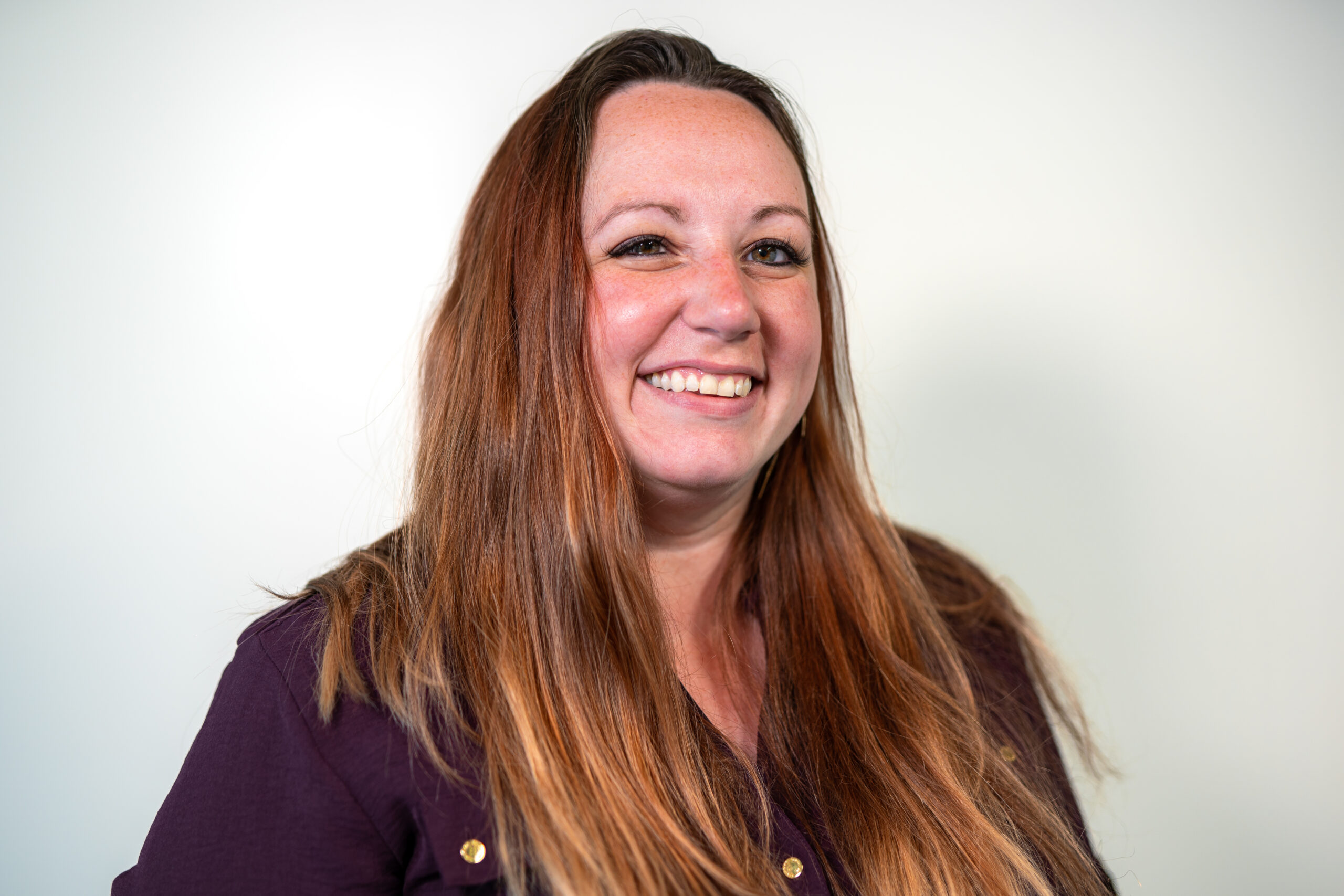
Amanda Draheim, Ph.D., L.P. (she/they) received her doctorate in clinical psychology from Georgia State University in Atlanta, Georgia. She completed her clinical internship in the Psychology of Women track at the Augusta Consortium (Medical College of Georgia and Charlie Norwood Veterans Affairs Medical Center). She is a tenure-track assistant professor at Goucher College in Maryland, and she practices therapy with Integrative Mental Health and Consulting. She specializes in trauma-focused treatment for survivors of sexual trauma.
Amanda also offers evidence-based treatment for anxiety disorders and depression. Her theoretical orientation is integrative across cognitive behavioral, third wave (i.e., mindfulness-based treatments including the Unified Protocol, acceptance and commitment therapy, and dialectical behavior therapy), and feminist orientations. Amanda has a strengths-based, person-centered, recovery-oriented approach to care. She provides individual psychotherapy for adults via telehealth with clients who are comfortable conducting sessions in English and she is authorized to practice in all PSYPACT states and territories.
Amanda identifies as a member of the LGBTQ+ community and welcomes clients of all races, ethnicities, nationalities, religions (or lack thereof), genders, sexualities (including ace/aro), body shapes and sizes, and abilities.
What are your personal strengths as a practitioner?
I think one of my greatest strengths is my dedication to reflective practice and lifelong learning. For every therapy session, I take the time to reflect on the case conceptualization, the processes of therapy, what I did well, and how I want to continue to improve and grow as a practitioner. My dedication to this practice is rooted in my appreciation for cultural humility, which represents one of the most important lessons I learned when I was in graduate school.
To me, cultural humility means approaching every client with openness, curiosity, and the recognition that I will never know everything about another person’s lived experience. Cultural humility also requires the willingness to acknowledge mistakes. No therapist gets everything right all the time, and I believe that being able to recognize my missteps, invite feedback, and repair ruptures is one of the most important ways we build trust. I see myself as continually evolving. Every client and every group of students teaches me something new, and I genuinely look forward to those opportunities to learn. Rather than seeing differences as barriers, I celebrate them as opportunities to broaden my perspective and become a more effective clinician.
What “tips” can you offer to colleagues just opening a practice?
This is such an overwhelming time, and our focus is easily consumed by the many tasks and doubts that come with getting established. My tip is to intentionally schedule time to breathe and reflect on how far you have come, and all you have overcome, to get to this point. Remember when you just got started? I remember being overwhelmed with all the steps involved in calling a new client to schedule an intake, learning how to charge for sessions, figuring out how to write a therapy note. I remember worrying so much about what to say next that it was hard to focus on what the client was telling me. I remember being boggled by the elusive concept of a case conceptualization. Now these things are automatic. We have learned the skills and passed the tests and now we are here. Take it in. Celebrate what you have achieved.
How do you remind your patients of their strengths during the therapy process?
I often use Padesky and Mooney’s (2012) strengths-based cognitive behavioral therapy approach, especially in the consolidation phase of treatment (see Maples and Walker’s 2014 article on more on using the phrase consolidation rather than termination). In brief, this approach involves (1) using Socratic Dialogue to elicit a client’s strengths (e.g., by asking about things they do for themselves or others even when busy or tired), (2) turning these strengths into strategies (by coming up with memorable phrases and images representing their strengths), (3) identifying challenging areas in a client’s life where they can practice generalizing their strengths, and (4) engaging in behavioral experiments where they apply resilience. Something that I love about this protocol is that it fosters an approach mindset in the face of difficulty: barriers and challenges are opportunities to practice what is being learned in therapy.
I also like to ask clients about the many barriers they may have overcome to access therapy with me. This conversation can sometimes become an opportunity to challenge the cultural myth that seeking therapy means you are weak. I ask clients to define bravery (e.g., going towards the fire or facing your fears). We reflect on what it means to go to therapy: to overcome so many barriers to accessing treatment, to open up and be vulnerable with a stranger, and in exposure therapy to literally face your worst fears. That is bravery and strength, not weakness.
Finally, learning the six levels of validation and different validation techniques from dialectical behavior therapy was transformative for me and my ability to reflect clients’ strengths in a manner that is genuine (note that, for survivors of sexual trauma, it can sometimes be incredibly frustrating to be told how strong they are when they should never have had to be strong in the first place). Validation reminds me to first acknowledge the pain and injustice of what they experienced before helping them recognize the resilience they demonstrated in surviving it and that they continue to demonstrate as they build a life worth living afterwards.
Are you involved in other types of professional activities in addition to your private practice?
In addition to my practice I am also a teacher, mentor, and researcher. At Goucher College, I teach undergraduate courses in clinical psychology, and I mentor students interested in pursuing careers in healthcare. My research focuses on improving the health and well-being of people with internalizing disorders and members of minoritized groups. I enjoy a great sense of synergy across these different roles. My teaching often inspires my practice and my research and vice versa. You can learn more about my teaching and research at my teaching portfolio website.
Who was your mentor?
I have benefitted from many amazing mentors over the years, many of whom are strong and inspiring women, starting with my mom. I’m convinced she defied the laws of physics to raise me as a single mom while working as a nurse full-time and, while I was in high school, completing her master’s degree. She taught me what strength looks like.
As an undergraduate student, Dr. Paula Hertel inspired me to follow in her footsteps and to offer my students the incredible opportunities that she gave me. As a post-baccalaureate researcher, Dr. Susan Nolen-Hoeksema taught me the importance of “people not constructs” and Dr. David Klemanski gave me opportunities to build the self-efficacy I needed to get into graduate school.
As a graduate student, Dr. Page Anderson was my primary mentor, and if I had to answer this question with just one mentor it would be her. She helped me become a stronger and more effective writer and she also showed me what it is like to advocate for your students. I also benefitted greatly from the supervision and mentorship of Dr. Erin Tone, Dr. Erin Tully, Dr. Aki Masuda, Dr. Dominic Parrott, Dr. Elana Zimand, Dr. Hal Rogers, Dr. Suzann Lawry, Dr. Susan Furman, Dr. Preston Elder, Dr. Negar Fani, Dr. Konrad Bresin, Dr. Ana Isabel Martinez de Andino, Dr. Madison Silverstein, Dr. Josephine Au, Dr. Dorian Lamis, and Dr. Keith Wood during my clinical training at Georgia State University. I’m particularly grateful for Dr. Furman’s mentorship. What she taught me about strengths-based CBT and case conceptualization has informed much of my practice, teaching, and research.
For my internship, my primary mentors were Dr. Rebecca Jump and Dr. Amy House, as well as Dr. Marlyn Villafañe, who shaped my clinical identity. They are the ones who taught me to be a trauma-focused therapist and about dialectical behavior therapy, validation, and self-compassion.
I also developed an enduring collaborative relationship with Dr. Lara Stepleman and members of her research team, including but not limited to Dr. Christopher Drescher, Dr. Tracy Casanova, Dr. Jessica Britt-Thomas, and Dr. Matt Kridel. They are teaching me how to be a health disparities researcher. And Dr. Lori Hilt has been a wonderful mentor and collaborator as I worked to establish myself as an early-career researcher and teacher.
I want to give a special thanks to Dr. Carol Yoder, who inspired me to pursue academia, and to Dr. Keith Woods and Dr. Christian Lemmon, who both adamantly conveyed their hopes that I would pursue licensure and helped motivate the persistence and resilience I needed to become a licensed therapist.
When not practicing CBT, what do you do for fun?
When I’m not practicing CBT, I love getting lost in a good fantasy novel, exploring new hiking trails, and traveling. Some of my favorite authors include Mercedes Lackey, Karen Marie Moning, Karen Chance, Deborah Harkness, and Rachel Caine. My favorite adventures so far have included hiking to the top of Mt. Le Conte in Great Smoky Mountains National Park, visiting the White Cliffs of Dover in Kent, England, and exploring the Fairy Pools on the Isle of Skye in Scotland. I’m especially excited about upcoming trips to Shenandoah National Park (Virginia), Yosemite National Park (California), and Tongariro National Park (New Zealand). Spending time in nature and discovering new places is one of my favorite ways to recharge and maintain balance.
What do you think is the single most important thing CBT can do for your clients?
From my perspective, one of the most important things CBT has to offer us is the strength, willingness, and freedom to approach things that scare us. We learn not to let our thoughts or emotions dictate our actions. Our thoughts are just thoughts and they are subject to bias, especially when unexamined. Just because a disastrous outcome is possible that doesn’t make it likely. And even if the worst happens, through behavioral experiments and exposure work we learn we are capable of handling more than we would have believed possible. By learning to approach what once was avoided, we can choose actions that fit with our values and what brings us sense of purpose and joy.
Where do you see the field of the behavioral therapies going over the next 3-5 years?
I see us headed into a more process-oriented approach that opens the door for better tailoring of treatment to our clients’ strengths and needs. I also see us using technology and advocating for change to make evidence-based treatment more accessible for more people. I hope for greater collaborations between behavioral approaches and public-health and community-level approaches to care.
How do you use the local or social media to educate your community on the benefits of CBT?
In my personal social media accounts, I regularly repost messages from APA, ABCT, SAMHSA, and other credible sources that challenge misconceptions about mental health. At Goucher College, much of my teaching is devoted to education about CBT and challenging stigma, including sharing stories of hope from people who have recovered from or are living well with all the disorders we study as a result of treatment and organizing community-facing events that communicate about helpful resources. This work shows that recovery is possible. In future, I hope to launch a sleep hygiene campaign, including teaching about stimulus control, and I dream of changing our college culture to one the prioritizes rest and well-being.
How long have you been a member of ABCT?
I went to my first ABCT conference in New York City in my sophomore year of undergrad, back in 2009, and I attended every year after that up until the COVID-19 pandemic.
How has ABCT helped you professionally?
ABCT has been part of nearly every stage of my professional journey. It helped me secure my post-baccalaureate research positions, supported me throughout the internship application process, and has provided countless opportunities for learning and networking. As a faculty member, I now encourage my students to become involved with ABCT so they can benefit from the same professional community that has meant so much to me.
What services do you consider the most valuable from ABCT?
For me, the most valuable services ABCT provides are the Annual Convention, the Special Interest Groups (SIGs), the professional community, and continuing education opportunities. As a student, presenting research at the Annual Convention and participating in SIG activities gave me invaluable opportunities to receive feedback, build relationships with mentors, and connect with colleagues who shared my interests. The ABCT listservs (now forums) even helped me find my post-baccalaureate research positions, making a lasting impact on my career trajectory. Today, as a licensed psychologist and faculty member, I especially value ABCT’s continuing education offerings and the opportunity to stay connected with advances in CBT while remaining part of a supportive community of scientist-practitioners.