

Find a CBT Therapist
Search through our directory of local clinicians.
The Interpersonal Emotion Lab
Meet ABCT’s Featured Lab
The Interpersonal Emotion Lab in the Department of Psychology at American University is led by Nathaniel R. Herr, Ph.D.
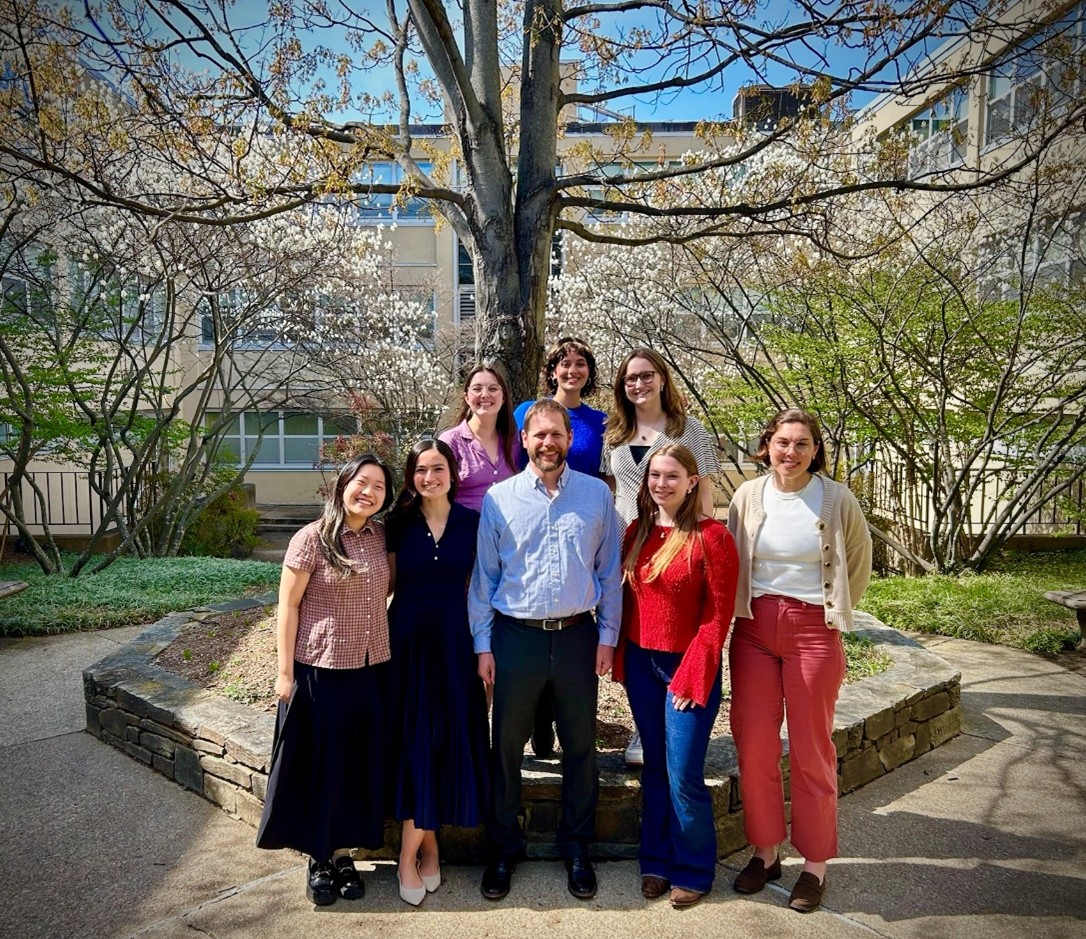
We asked each of the Interpersonal Emotion Lab’s members:
- What is your primary research interest?
- How has ABCT been helpful to you?
- If the student is or has ever been a member of ABCT: If a student were thinking about joining ABCT, what activities would you recommend they get involved in?
Trainee Lab Members
Catherine A. Ratelle, B.S.
 What is your primary research interest?
Catherine’s primary research interest focuses on interpersonal functioning in relation to suicidality and non-suicidal self-injury, with particular attention to emotion regulation and personality pathology. She is also interested in psychotherapy processes, including therapist–patient dynamics such as rupture and repair, and how these processes shape treatment engagement and outcomes within diverse cultural contexts and underserved populations.
Elizabeth Reed, B.A.
 What is your primary research interest?
My primary research interest lies at the intersection of mental health, substance use, and the criminal justice system, with a particular focus on how these overlapping factors shape justice outcomes and access to treatment. I am interested in understanding how individuals with co-occurring mental health and substance use disorders are processed within legal systems, and how disparities in access to care, diversion programs, and rehabilitative resources influence recidivism and long-term wellbeing. I am also interested in evaluating alternatives to punitive approaches, including treatment-oriented and trauma-informed interventions, and how these models can improve both individual outcomes and broader public health and safety.
Lindsey Tarantola, B.A.
 What is your primary research interest?
Lindsey’s research interests lie at the intersection of social and abnormal psychology. She is particularly interested in emotion dysregulation and the role of interpersonal relationships in influencing treatment outcomes.
Ella Sara Sudit, M.A.
 What is your primary research interest?
Ella’s current research focuses on how emotion processing ability-particularly Emotion Differentiation-impacts mental health trans-diagnostically across the lifespan. In her work, Ella emphasizes using authentic methods of measurement like ecological momentary assessment and daily diary to consider how identities, relationships, and environment influences these processes. She specifically is interested in researching intra- and inter- personal emotion processing in close relationships such as romantic couples, close friendships, and parent-child dyads.
How has ABCT been helpful to you?
The ABCT conference was the first research conference I ever attended and has been our lab’s big conference every year! The conference is such as an amazing opportunity to be exposed to cutting edge research, meet amazing clinicians/researchers, and present and get feedback on my own work. I feel very grateful for the community I have been able to build through ABCT and the connections and collaborations that I would never have created without it.
If a student were thinking about joining ABCT, what activities would you recommend they get involved in?
I would definitely recommend getting involved in SIGs that are aligned with your research interest and also to attend SIG meetings on topics that you are interested in learning more about. Being involved in SIG has allowed me to learn more about research topics and connect with students and researchers to collaborate.
Elsa Baumgartner, B.S.
 What is your primary research interest?
My research interests center on the mechanisms underlying borderline personality disorder (BPD), with a particular focus on emotion dysregulation and how it manifests both internally and interpersonally. Internally, I am interested in alexithymia and the capacity for emotion recognition and insight in individuals with BPD. Interpersonally, I am interested in how dysregulated emotion shapes relational outcomes, including aggression, suicidal behavior, and nonsuicidal self-injury.
How has ABCT been helpful to you?
ABCT has been a useful resource for professional development and networking. Through the organization, I have been able to identify potential collaborators, strengthen connections within my lab, and connect with researchers whose work aligns with my own. Joining SIGs has been a particularly valuable aspect of membership, providing focused community around specific research areas and facilitating conversations with others working on related topics.
If a student were thinking about joining ABCT, what activities would you recommend they get involved in?
I would encourage potential members to submit a poster to the annual convention, even early in their training. Presenting your work is an effective way to receive feedback, generate new ideas, and begin building visibility in the field. I would also recommend joining one or two SIGs that align with your research interests, as they offer a more focused context for engaging with others working on similar questions. For those newer to the organization, the Student SIG is a good starting point and an accessible way to get oriented.
Jessica Qiu, B.A.
 What is your primary research interest?
Jessica’s research examines the mechanisms of identity disturbance in borderline personality disorder, with a focus on how emotion dysregulation and interpersonal processes contribute to fluctuations in identity and functioning in daily life using ambulatory assessment methods. She is also interested in developing culturally responsive interventions to support the mental health of first- and second-generation immigrant communities.
How has ABCT been helpful to you?
ABCT has consistently been my favorite conference to attend both professionally and socially! In addition to providing me numerous opportunities to present my work, it has enabled me to build meaningful connections with other researchers, kept me informed on emerging work in the field, and cultivated a strong sense of community (shoutout to the Personality/Personality Disorder SIG!)
If a student were thinking about joining ABCT, what activities would you recommend they get involved in?
I highly recommend that new members join a SIG that aligns with their areas of interest. It’s a great way to stay connected with others in the field and to foster future collaborations. SIGs also often offer leadership opportunities for trainees, allowing you to directly help shape the professional development opportunities you’d like to see. Additionally, one of my favorite things to do at ABCT is attend talks outside of my primary areas of interest—you never know what inspiration or new perspectives you might gain from different fields!
Kelly V. Klein, M.A.
 What is your primary research interest?
My research focuses on affective and interpersonal processes in borderline personality disorder and depression, with a particular emphasis on identity disturbance, emotion dysregulation, interpersonal dysfunction, and suicide risk in daily life. I am especially interested in how interpersonal contexts and emotion dysregulation interact to shape momentary experiences and behaviors, and contribute to suicide risk. I use intensive longitudinal methods (e.g., EMA, daily diary) and idiographic approaches to examine how these processes unfold within individuals and across settings, including in social media and broader digital mental health contexts.
How has ABCT been helpful to you?
I’ve been a member of ABCT for about 6 years now, time flies! I remember attending my first conference virtually during COVID. Since then, ABCT has become a really meaningful space for me to connect with others who share similar research and clinical interests. It’s been especially valuable for presenting my work, receiving thoughtful and constructive feedback, and staying engaged with new developments in the field. I’ve also taken on leadership roles within SIGs and committees, which has helped me hone my leadership skills and build lasting relationships within the community. Many of the connections I’ve made through ABCT have developed into ongoing collaborations, mentorship, and friendships.
If a student were thinking about joining ABCT, what activities would you recommend they get involved in?
I would definitely recommend submitting work to the annual convention and getting involved in a SIG or a committee that aligns with your interests, both are great ways to meet people and find collaborators at all levels of training! Attending social and networking events can also make a big difference in feeling connected and part of the ABCT community. I’d also encourage you to be bold, and not hesitate to introduce yourself to researchers whose work you admire. Chances are, they’ll be flattered, and would love to answer your questions! And you never know what collaborations or opportunities that interaction could lead to.
Paloma K. Zabala Rossy, M.A.
 What is your primary research interest?
Paloma’s primary research interests are interpersonal factors and contexts, identity disturbance, and other borderline personality disorder symptoms related to culture. Specifically, Paloma is interested in examining cultural identity, values, and customs which may support resiliency related to psychopathology. Paloma aims to continue exploring BPD symptoms using a cultural framework to elucidate psychopathology within minoritized communities and potential protective factors that could be utilized in therapeutic interventions.
How has ABCT been helpful to you?
As a member of ABCT, I can confidently say there has been extraordinary benefit to being a member. Attending a large annual conference with such variety and breadth of topics, I have been able to broaden my own interests, learn new methodologies that I can utilize in my research, and get inspired by the incredible work being done in the field! As a student, having opportunities to meet other researchers and other students in the field has been invaluable—I have been lucky enough to make connections with other students which have led to collaborations. ABCT is our labs favorite conference, and getting to attend annually with my research family has been one of the best experiences of grad school so far! Upon starting at American University, I have joined several SIGs and it has made my experience at ABCT even better.
If a student were thinking about joining ABCT, what activities would you recommend they get involved in?
I would absolutely recommend a student or trainee join ABCT for all of the aforementioned benefits. I believe that presenting at ABCT is a remarkable experience allowing individuals to grow as researchers and getting to describe their work in a clear and concise manner. I have raved of the experience of attending ABCT and several of my cohort mates have since submitted their work to attend the annual conference and getting involved in SIGs aligning with their research interests. This year I have begun getting involved in committees within the P/PD SIG such as the diversity task force and social media committee—these opportunities support my development as leader in topics that interest me as connecting with other personality disorder researchers.
Ramya Ramadurai, M.A.
 What is your primary research interest?
Ramya is a 6th year clinical psychology doctoral candidate at American University and a current predoctoral intern at Harvard Medical School/McLean Hospital. Her translational research program focuses on two interconnected lines of work: 1) identifying affective and interpersonal predictors of emotion dysregulation and suicidality, often in the context of Borderline Personality Disorder; and 2) developing, evaluating, and implementing digital and brief psychotherapy interventions to reduce emotion dysregulation and suicidality, and promote living. She takes a person-centered approach, incorporating social identity and related stress to both lines of work, to promote the cultural responsivity of care.
How has ABCT been helpful to you?
ABCT has been an incredible forum to grow community and connections (social and professional) and develop as a researcher and practitioner. More specifically, the various avenues for involvement in ABCT (i.e., committees, SIGs) have allowed me to meet, connect, and collaborate with individuals across institutions, and create community with both peers and mentors in the same subject-matter area. These experiences have stoked my intellectual curiosity, deepened my clinical and research approaches, and have been invaluable from a professional development perspective.
If a student were thinking about joining ABCT, what activities would you recommend they get involved in?
I would highly recommend presenting at ABCT to grow research dissemination skills, connect with potential collaborators, and learn from others work. Joining a committee has also been a really wonderful experience as it has allowed me to grow professional connections, learn practical skills relevant to my career aspirations (e.g., grant writing and review), and contribute to ABCT in a way that feels meaningful. I have also appreciated being a part of SIG groups and committees within these SIGs to learn from others engaged in related research and consider how our research may inform changes to the way particular topics are studied.
Nathaniel R. Herr, Ph.D.

Nathaniel Herr is an Associate Professor and the Director of Clinical Training in the Department of Psychology at American University in Washington, DC. Dr. Herr received his PhD in Clinical Psychology from the University of California, Los Angeles and completed postdoctoral training and a faculty appointment at Duke University Medical Center. His research focuses on the etiology and effects of interpersonal dysfunction, emotion regulation difficulties, and identity disturbance, particularly among adults or emerging adults with borderline personality disorder (BPD). He also trains students in dialectical behavior therapy (DBT) and statistical methods in psychology.
The Interpersonal Emotion Laboratory at American University examines topics broadly related to emotion regulation, interpersonal functioning, and identity disturbance. We are interested in how interpersonal relationships can facilitate both effective and ineffective emotion regulation, particularly within the context of borderline personality disorder (BPD). We study which relationships, relationship behaviors, or interpersonal cognitions are effective and which are ineffective for individuals with BPD and related disorders. We also study the role that identity disturbance plays in interpersonal dysfunction and emotion dysregulation, and how skills to improve identity disturbance can be integrated with DBT.
How long have you been a member of ABCT?
This will be my 25th year as a member of ABCT.
How often and why do you attend the ABCT convention?
I attend ABCT every year. Over the course of my professional life, I’ve always viewed ABCT as my “home” convention, but the reasons for attending have shifted over the years. As a student, I appreciated the chance to see and even meet (!) researchers I greatly admired, interacting with other motivated and brilliant students, and having a chance to see my advisor kick back a little in a relaxed setting. Early in my career, ABCT gave me the chance to have leadership roles, present my work, and network with others, ultimately being the place where I first met the people who are now my colleagues at American. Now, I love the way that ABCT provides opportunities for my own students to disseminate their work and to be inspired, and that ABCT is a place for my current and former students to meet, share ideas, and feel the connection with a larger research family.
How do you stay current with developments in the field (research and/or practice and/or policy)?
It’s a challenge, but it’s a mix of reading, email blasts, and my students bringing the most current developments with them to our meetings.
How has ABCT helped you/your lab professionally (e.g., network/collaborate, stay current with developments in the field, meet prospective/former trainees)?
ABCT helps us professionally in many ways. Of course it is a great outlet for disseminating our work, and the process of developing abstracts, presenting posters, and eventually talks, is one of the more important outside-of-class training experiences that my lab members have each year. Returning from the convention I always observe an explosion of inspiration and exciting new directions in the lab’s work. ABCT has been a vital place to network for my students, and has led to many collaborative research projects and connections between my students and potential future mentors as they advance to internship or postdoctoral positions. The opportunities for student leadership have also been incredibly helpful for both my and my students’ professional development.
Does your lab have any traditions? Does your lab do anything together for fun?
Our lab has quite a few traditions. New members to the lab make Ekman-like black and white emotion faces that decorate our lab space. The lab décor gets a makeover for holidays as well. We get together at the end of each semester for a lab outing where we toast our lab achievements over food and shots (water or tequila, as desired). April Fool’s Day has become a dangerous time around the lab… At the end of the year, we have a day-long lab retreat where we make plans for upcoming projects. And, when students graduate, they write a secret note that gets added to a collection of notes from previous graduates. These notes and a literal baton are passed to the next most-senior student, who is thereafter dubbed the “Lab Boss.”
What advice would you give prospective trainees?
When I asked my students this, they said that prospective lab members should come with a collaborative spirit, have a willingness to find humor and lightness in the hard work we do every day, have an openness to bringing their own unique personas to the lab, and remember that working in psychology research is being part of a community and that we all do far better work when we share, communicate, and help one another. They summed up what they see as the best approach for being a successful member of our lab with the following statement, which I report verbatim: “No assholes allowed.”